Brakes that stop the car the way the maker intended.
Pads, discs, drums, fluid, calipers and handbrakes, inspected properly and repaired to specification. We tell you what is worn, what can wait, and what cannot.
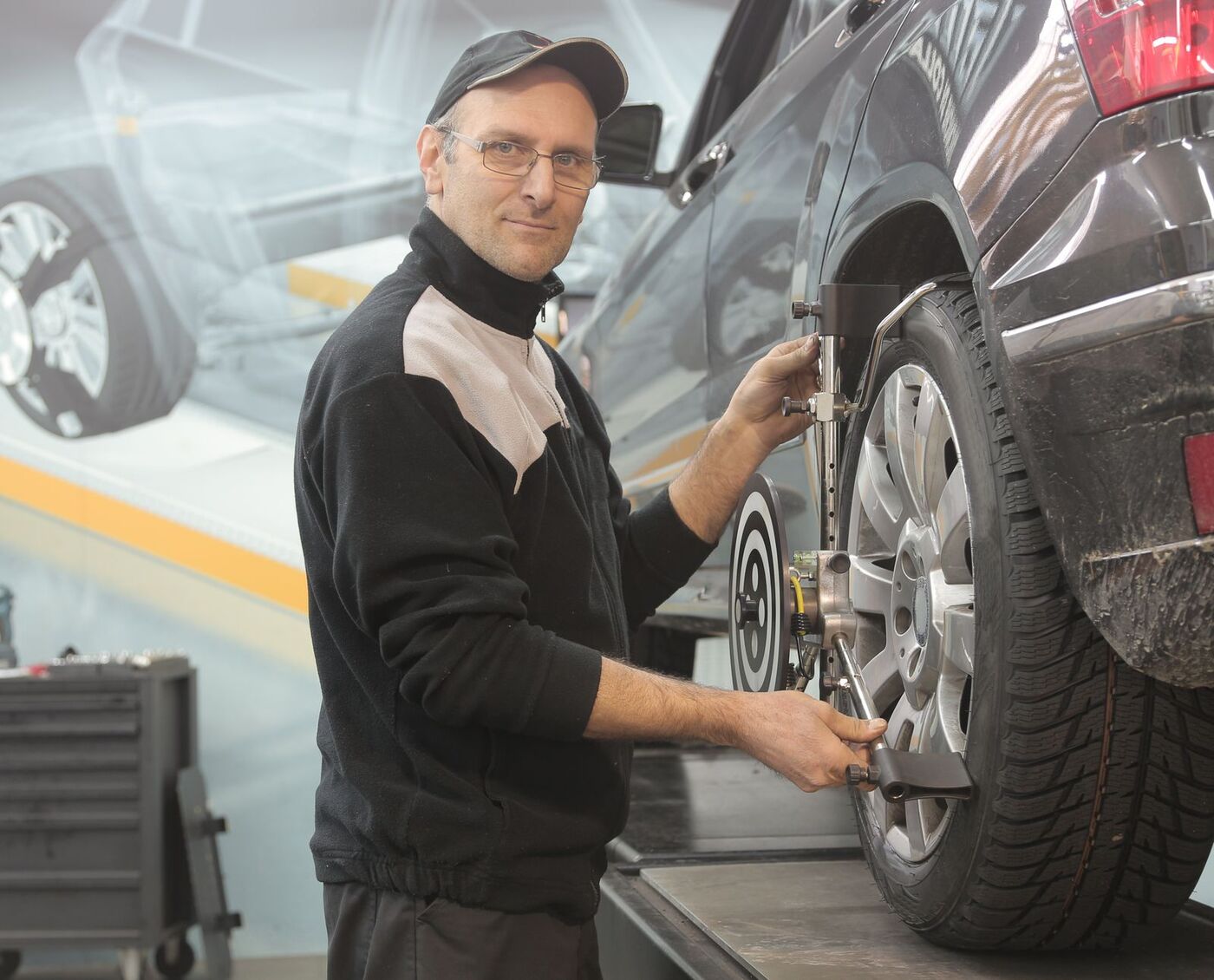
Why brakes deserve more than a glance
Of every system on a car, the brakes are the one you cannot afford to have “mostly working”. Modern cars are lighter, more aerodynamic and mostly front-wheel drive, which has made brakes smaller, more precise and far less forgiving of poor maintenance. A brake job done approximately is worse than one not done at all.
Our brake service covers the lot: new pads, discs, drums and shoes, handbrake adjustment and repair, fluid flushes, caliper rebuilds and the ABS and electronic parking brake systems that general workshops often cannot diagnose. If you can’t stop quickly and in a straight line, you and the people in the car are at risk, so this is work we take seriously.
Danger signs
Book a brake check if you notice any of these.
- Screeching, squealing or grinding when you brake.
- A pedal that is low, hard, soft or spongy.
- Shudder through the steering wheel under braking.
- The car losing grip or skipping under braking.
- The car pulling to the left or right when you brake.
- Stopping distances that feel longer than they used to.
The two kinds of brakes
Every car uses one of two systems, or a combination of both.
Disc brakes
A disc (rotor) turns with the wheel. A fixed caliper straddles it, and when you press the pedal, hydraulic pressure squeezes the pads against the disc, much like a bicycle brake clamping the rim. Most modern cars run discs on all four corners, or discs at the front and drums at the rear.
Drum brakes
A drum turns with the wheel and the brake shoes sit inside it. Pedal pressure pushes the shoes outward until their linings press against the inside of the drum. Drums are still common on the rear of smaller cars and on utes and vans.
Both types are sensitive to heat, water and moisture, and both wear a little every single time you touch the pedal.
Brake fluid: the part everyone forgets
Brake fluid is hygroscopic. It pulls moisture out of the air, and the more moisture it holds, the lower its boiling point.
- New fluid boils at around 250°C.
- After roughly four months, with about 1% moisture, around 200°C.
- After ten to twelve months, with about 3% moisture, around 150°C.
As the boiling point drops, braking efficiency drops with it. On a long descent, or through a run of tight bends where you are on the brakes constantly, old fluid can boil, the pedal goes long, and the brakes fail suddenly. Moisture also attacks the rubber seals and moving parts inside the system. A fluid flush is cheap insurance and is included in our Elite service package.
What a proper brake repair involves
Fitting pads and bleeding the system is the easy part. Depending on what we find, a complete repair can also mean:
- Inspecting calipers and rebuilding or replacing them.
- Machining or replacing discs and drums.
- Inspecting wheel bearings and repacking or replacing them.
- Inspecting backing plates and every brake line.
- Replacing hardware and spring kits on drum brakes where needed.
- Inspecting wheel cylinders and the master cylinder and replacing them if required.
- Flushing the whole hydraulic system.
We measure before we recommend. Pad thickness, disc thickness and run-out are checked against the manufacturer’s limits, so you are not sold parts that still have life in them.
Hybrid, European and Japanese brakes
European cars often have wear sensors and electronic parking brakes that need a scan tool to service correctly. Hybrids and EVs use regenerative braking, which means the friction brakes are used less and can seize through lack of use. Japanese imports frequently arrive with rear drums that have never been adjusted. We see all three every week and have the tooling for each.
What happens next
Book a brake check online or send an enquiry below. We confirm by text or email. The inspection takes about half an hour; you then get a written quote that separates urgent work from work that can wait. Nothing beyond what you approve is carried out.
Common questions
How do I know my brakes need attention?
Squealing or grinding, a pedal that feels low, hard or spongy, shudder through the wheel, the car pulling to one side, or simply taking longer to stop than it used to. Any one of these is reason enough to have them looked at.
How often should brakes be checked?
Every 15,000 km, or at every service. Brakes are also checked as part of every one of our service packages and every WOF.
Why does brake fluid need replacing if the level is fine?
Brake fluid absorbs moisture from the air over time. That lowers its boiling point, so under hard or prolonged use it can boil and the pedal goes to the floor. It also corrodes internal parts. We recommend a flush every two years regardless of level.
Do hybrids and EVs need brake work?
Yes, but differently. Regenerative braking means the friction brakes are used less, so pads last longer but calipers and slides can seize from lack of use. We service and free them rather than waiting for a WOF failure.
Will you replace parts I do not need?
No. Brakes are inspected, measured and photographed. You get a quote that separates what is urgent from what can wait, and we only do what you approve.
Enquire or book: Brakes
Tell us about the car and what it needs. We reply within the hour during workshop hours and confirm every booking by text or email.
Thanks, your enquiry is on its way.
We will confirm your booking by text or email, usually within the hour during workshop hours.